
The digital marketing funnel is a vital tool for guiding potential customers. It maps the journey from awareness to conversion. Understanding this funnel is crucial for marketers and business owners. It helps in crafting strategies that lead to successful conversions. Each stage of the funnel plays a unique role. From capturing attention to closing sales, every step is important. Funnel optimization is about improving these stages. It aims to increase conversion rates and enhance customer experience. A well-structured funnel strategy can transform leads into loyal customers. It ensures a smooth transition through the buying process. Digital marketing funnel examples offer practical insights.
What is a Funnel in Digital Marketing?
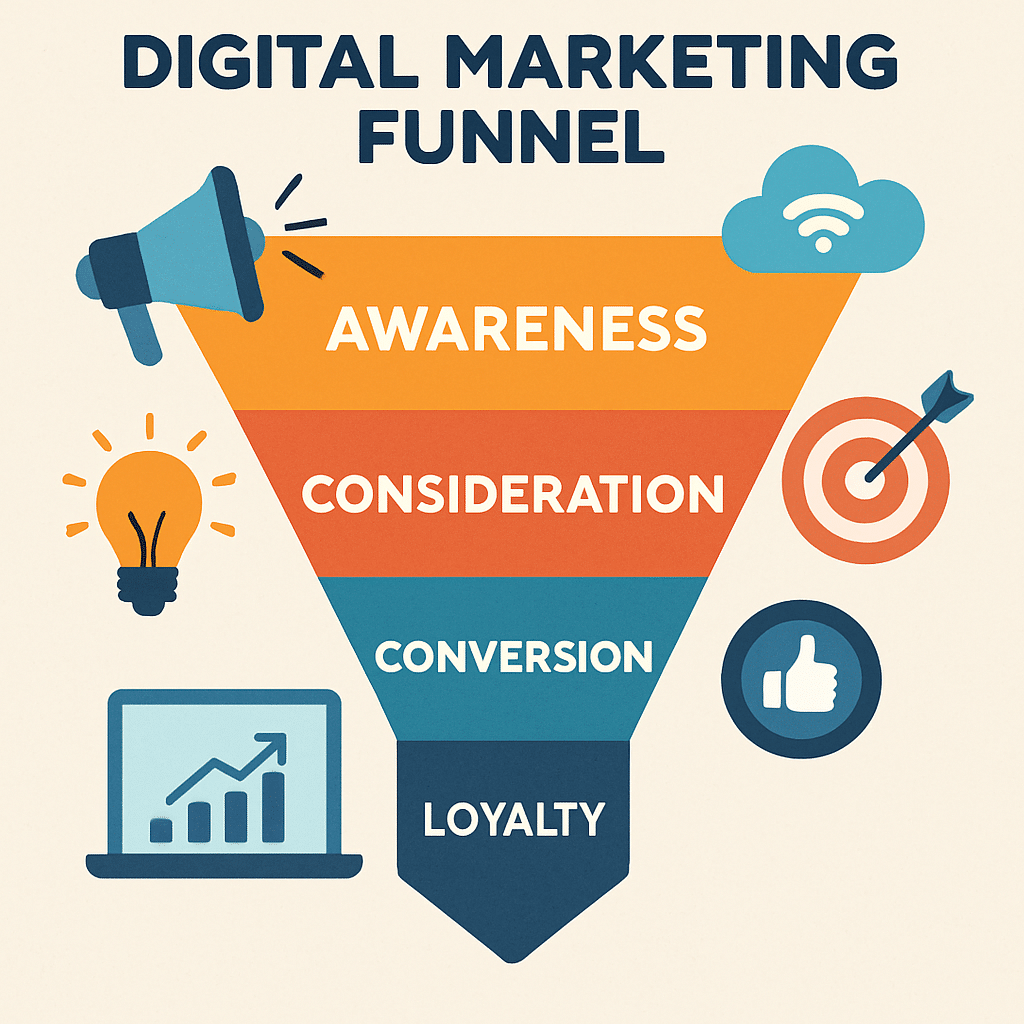
A digital marketing funnel describes the path potential customers take. It begins from their first interaction with a brand and ends with a purchase or conversion. The funnel helps marketers visualize how to lead prospects. It outlines each step taken toward becoming a paying customer. Marketers (Digital Marketing Funnel) use a variety of tactics within the funnel. These ensure prospects move smoothly from one stage to the next.
A typical funnel includes several key stages:
- Awareness: The potential customer becomes aware of the brand.
- Interest: The potential customer shows interest in what the brand offers.
- Consideration: The potential customer considers purchasing the product or service.
- Conversion: The potential customer makes a purchase.
Understanding these stages is crucial for funnel strategy. It allows for targeted approaches at each point in the customer journey.
The Importance of the Digital Marketing Funnel
The digital marketing funnel is critical for understanding the customer journey. It helps businesses see how a prospect becomes a customer. By visualizing each stage, companies can better allocate resources. Each funnel stage requires a unique approach. Personalized strategies enhance effectiveness and increase conversion rates. This ensures the prospect progresses through the funnel smoothly. A well-optimized funnel leads to higher sales and customer satisfaction. It improves both short-term and long-term business success. By refining strategies, companies can maintain engagement and drive growth.
Here are key benefits of using a digital marketing funnel:
- Enhances customer engagement and satisfaction
- Increases conversion rates and sales
- Provides insights into customer behavior
Understanding and optimizing the funnel is essential for any modern business. It lays the foundation for effective marketing and customer relations.
Key Stages of the Digital Marketing Funnel
The digital marketing funnel guides prospects through distinct stages. Each phase reflects a part of the customer journey toward a purchase. Understanding these stages is vital for effective funnel optimization. The major stages include Awareness, Interest, Consideration, Intent, Evaluation, and Purchase. Each stage demands a unique approach. Let’s explore each stage in detail to understand how they fit into a comprehensive funnel strategy.
Awareness Stage
The awareness stage focuses on capturing attention and building brand recognition. This is where potential customers first learn about your products or services. Successful strategies here involve broad outreach tactics. Common tactics include content marketing, social media campaigns, and SEO practices. Use these to draw potential leads into your funnel. The goal is to generate awareness and start building relationships. At this stage, deliver valuable content to captivate your audience. Ensure your messaging is clear and relevant. A well-crafted awareness strategy can spark interest and guide prospects into the next funnel stage.
- Use captivating blog posts and videos
- Leverage targeted social media ads
- Optimize your website for search engines
Getting prospects to notice your brand is just the first step. Proper execution during the awareness stage sets the tone for the entire customer journey.
Interest Stage
The interest stage involves nurturing prospects who show curiosity about your offerings. It’s crucial to engage them with relevant and insightful content. Your goal is to deepen their interest and keep them intrigued. Focus on providing value through detailed content. Webinars, newsletters, and educational posts work well here. These tools can inform prospects while maintaining their interest. At this stage, pay attention to personalizing interactions. Tailor content to individual needs and preferences. A customized approach can significantly improve engagement levels.
- Develop informative webinars and tutorials
- Create personalized newsletters
- Share insightful articles and case studies
Capturing interest requires understanding what motivates your audience. Use this stage to position your brand as a reliable source in your niche.
Consideration Stage
In the consideration stage, prospects actively evaluate your products or services. They compare options and decide which can best meet their needs. It’s crucial to present convincing content. Use case studies, testimonials, and product comparisons to appeal to prospects. Highlight unique selling points and differentiate your offerings. This builds trust and credibility. Demonstrate how your solutions can solve their problems. Focus on the benefits rather than just features. Persuasive content can ease decision-making and advance them to the next stage.
- Highlight customer success stories
- Provide detailed product comparisons
- Offer free trials or demos
A solid consideration strategy helps prospects see your value. It paves the way for their movement toward purchase intent.
Intent Stage
During the intent stage, potential customers signal readiness to buy. They might begin reaching out with inquiries. This is the time to strengthen confidence and reassure prospects. Offer personalized consultations or consultations to address any concerns. Make sure your sales team is prepared to answer all questions. Present evidence that supports their decision. Make the purchase process visible and simple. Reduce any friction that might deter them. A smooth transition from interest to intent is crucial for maximizing conversions.
- Provide tailored solutions to inquiries
- Offer personalized demos or consultations
- Ensure the purchase path is straightforward
The intent stage marks a turning point in the funnel. It’s crucial to be responsive and supportive in guiding prospects toward a final decision.
Evaluation Stage
The evaluation stage is where prospects finalize their choice. They scrutinize options and assess the pros and cons. Providing transparent information is pivotal. Showcase detailed documentation and product specifications. Use customer reviews and testimonials to bolster confidence. Address any remaining objections candidly. Personal interactions can further reinforce trust. Consider involving your sales team for direct engagement. The aim is to affirm their choice with clarity and honesty.
- Offer comprehensive product guides
- Use testimonials and reviews extensively
- Engage directly with prospects, if possible
Effective evaluation strategies nurture confidence in your offer. It’s the final step before they commit to making a purchase.
Purchase/Conversion Stage
The purchase stage marks the transition from prospect to customer. Here, the customer commits to acquiring your product or service. A streamlined and easy process enhances satisfaction. Ensure a seamless transaction process with minimal steps. Provide clear instructions and multiple payment options. Each touchpoint should reinforce their decision. Focus on creating a memorable buying experience. Follow up with a thank you message and confirm the purchase. Reinforce your relationship with continued engagement.
- Simplify the payment and checkout process
- Offer various secure payment methods
- Provide immediate purchase confirmation and gratitude notes
Conversion isn’t the final goal but rather a pivotal moment in an ongoing relationship. Make sure the experience leaves a positive impression.
Post-Purchase and Retention Stage
The post-purchase stage is crucial for customer retention and loyalty. It’s about maintaining the relationship and encouraging repeat business. Focus on customer satisfaction and support. Engage customers with follow-up emails and check-ins. Offer them additional resources and exclusive offers. Demonstrating continued value promotes brand loyalty.
A satisfied customer may advocate for your brand. Encourage them to provide feedback and share their experiences. This stage cultivates long-term connections with your client base.
- Send personalized follow-up emails
- Offer loyalty rewards and exclusive content
- Encourage feedback and referrals
Retaining customers is more cost-effective than acquiring new ones. Ensure your efforts extend beyond the initial purchase to foster lasting partnerships.
Funnel Optimization: Strategies for Every Stage
Funnel optimization is key to enhancing conversion rates across each stage. Tailoring approaches for distinct phases ensures effective transitions between stages. The goal is a seamless journey from awareness to post-purchase. Understanding customer behavior at different stages is fundamental. Analyze data to uncover strengths and weak points in your funnel. Leverage insights to create more efficient strategies. For the awareness stage, focus on casting a wider net. Use targeted ads and compelling social media content to draw in more leads. Consistent engagement keeps prospects moving forward. In the evaluation phase, provide ample information and resources. Detailed FAQs and comparison charts can solidify trust. Addressing potential objections head-on can facilitate smoother transitions to purchase.
Regularly testing different strategies is essential for improvement. A/B testing can reveal what truly resonates with your audience. Implement changes based on what performs best.
- Analyze and utilize customer data
- Conduct A/B tests to refine strategies
- Create tailored content for each funnel stage
Optimization is a continuous process. Stay adaptable and ready to adjust tactics in response to customer feedback and market trends.
Full Funnel Digital Marketing Strategy
A full funnel digital marketing strategy covers every funnel stage. It ensures a cohesive journey for potential customers from start to finish. Each stage must be interconnected for a seamless experience. Aligning marketing efforts with the funnel stages boosts effectiveness. Different tactics resonate at various points. Tailoring messages to each stage fosters better engagement and conversion. Successful strategies involve constant monitoring and adjustments. As customer behaviors evolve, so must your approach. Adaptability and responsiveness are critical to a robust funnel strategy.
Key elements of a full funnel strategy include:
- Targeted advertising campaigns
- Engaging content creation
- Personalized email marketing
- Continuous data analysis
Integrated strategies ensure a consistent message throughout the customer journey. This builds brand trust and increases customer loyalty. A cohesive funnel strategy maximizes conversions and enhances overall marketing efficiency.
Digital Marketing Funnel Examples
Understanding a digital upper funnel marketing can seem complex. Real-world examples simplify this concept. They illustrate how businesses guide customers from awareness to conversion. Let’s explore three diverse examples. Each one highlights different industry approaches. This will offer insights into creating a tailored funnel strategy. These examples reveal techniques for guiding prospects effectively and maximizing conversions.
Example 1: SaaS Company Digital Marketing Funnel
A SaaS company leverages a marketing funnel explained to acquire users. It begins with free trials to attract interest. Potential users become aware of the software through online ads. The next stage engages them with informative webinars. These sessions demonstrate product value and functionality. It encourages prospects to move from interest to consideration.
At the decision stage, the company offers limited-time discounts. This creates urgency and boosts conversions. The digital marketing funnel also includes:
- Retargeting ads
- Personalized emails
- Onboarding support
Implementing such a funnel increases user acquisition. It also ensures seamless transitions between stages. This process leads to higher subscriptions and revenue growth.
Example 2: E-commerce Funnel
An e-commerce business uses a digital funnel marketing strategy to enhance sales. The journey starts with social media campaigns. These campaigns introduce new products to a broad audience. Website visitors find detailed product pages next. Quality content, like reviews and videos, holds their interest. It helps convert curiosity into consideration. As customers reach the intent stage, strategic offers appear. These might include abandoned cart reminders. Such tactics nudge prospects toward purchase. The full funnel marketing tactics includes:
- Engaging product descriptions
- Live chat support
- Loyalty programs
This approach elevates customer experiences. By guiding through personalized offers, the business boosts conversion rates. It strengthens brand loyalty and repeat purchases.
Example 3: B2B Lead Generation Funnel
A B2B company optimizes its digital marketing funnel for lead generation. It starts with educational content to attract prospects. eBooks and blog posts provide valuable insights during the awareness stage. Next, prospects register for in-depth webinars. These events highlight specific solutions. They progress leads from interest to active consideration. For the intent stage, the company offers consultations. Personalized interactions foster trust and move leads forward. The funnel elements are:
- Case studies
- Targeted LinkedIn ads
- Follow-up emails
This structured approach enhances lead qualification. It ensures prospects are well-informed before contacting sales. Such a digital marketing funnel accelerates the buying process and enhances conversion.
Metrics and KPIs for Funnel Performance
Measuring digital marketing funnel performance requires key metrics and KPIs. These indicators reveal success rates and areas needing attention. Regular monitoring aids in making informed decisions. Conversion rate is a primary metric. It shows the percentage of prospects moving through the funnel stages. High conversion rates indicate effective funnel strategies. Another important metric is customer acquisition cost (CAC). This measures the total cost to acquire a new customer. Lowering CAC increases profitability and funnel efficiency.
Analytics tools can track these metrics:
- Bounce rate
- Lead time
- Customer lifetime value (CLV)
Analyzing these helps optimize each stage. For instance, a high bounce rate may indicate poor landing pages. Improvements at specific digital marketing funnel points lead to enhanced performance. Tracking these metrics offers actionable insights. It drives continuous improvement. This ensures the digital marketing funnel remains responsive to market demands.
Tools and Technologies for Digital Marketing Funnel Management
Effective funnel management relies heavily on the right tools and technologies. These tools streamline processes and offer valuable insights. Selecting the right technology is crucial for success. CRM systems are fundamental for managing customer relationships. They track interactions and improve communication. This results in personalized experiences and better lead nurturing.
Marketing automation platforms simplify repetitive tasks. They automate emails, social media, and other marketing activities. Automation ensures consistency and saves time.
Key technologies include:
- Customer Relationship Management (CRM) systems
- Marketing automation platforms
- Data analytics tools
- A/B testing software
Data analytics tools provide insights into customer behavior. They help refine digital marketing funnel strategies based on real-time data. A/B testing software assesses campaign effectiveness, driving optimization. Choosing suitable tools enhances efficiency. It supports marketers in crafting seamless customer journeys. Proper technology integration ultimately boosts conversion rates.
Common Challenges and How to Overcome Them
Navigating the digital marketing funnel presents several challenges. One common issue is identifying the right audience. Without this, prospects may not engage or convert effectively. Another challenge is maintaining engagement throughout the funnel stages. Prospects can lose interest if the content isn’t relevant or timely. Keeping them engaged requires ongoing effort and content updates. Conversion rate optimization (CRO) often stalls. Even with traffic, conversions may remain low if the funnel isn’t optimized. Continuous testing and adaptation are key to overcoming this.
Common challenges include:
- Audience targeting issues
- Maintaining engagement
- Poor conversion rates
To address these challenges, regularly analyze metrics. Adjust strategies based on data insights. Continual learning and flexibility ensure an effective funnel strategy that adapts to changing market conditions.
Best Practices for Digital Marketing Funnel Optimization
Funnel optimization is crucial for enhancing conversion rates. Start by understanding the customer journey in detail. This knowledge helps tailor each funnel stage effectively.
Personalization plays a vital role in optimizing the digital marketing funnel sales funnel. Customize content and messages for specific audience segments. Personalized approaches increase engagement and conversion likelihood.
Regularly test different elements within your funnel. A/B testing provides insights on what works and what doesn’t. Use these insights to continuously refine strategies for better outcomes.
Best practices include:
- Deep customer journey analysis
- Personalized content
- Regular A/B testing
Implementing these practices keeps your digital marketing funnel dynamic and responsive. A well-optimized funnel is flexible and adapts to evolving customer needs and market trends, ensuring long-term success.
The Role of Digital Marketing Agencies in Funnel Strategy
Digital marketing agencies play a critical role in crafting effective funnel strategies. They bring expertise and experience to the table. Their knowledge helps businesses navigate complex digital landscapes.
Agencies provide tailored digital marketing funnel solutions for different industries. They analyze specific business needs and customer behaviors. This personalized approach ensures that each stage of the funnel is optimized.
Working with a digital marketing agency can offer several benefits:
- Access to specialized expertise
- Custom strategies aligned with business goals
- Enhanced creativity and innovation
Collaborating with an agency allows businesses to leverage cutting-edge tools and technologies. This partnership helps maximize digital marketing funnel performance and achieve significant marketing objectives. Agencies adapt to changing trends, ensuring the strategy remains competitive and effective.
Conclusion: Building a Successful Digital Marketing Funnel
Creating a successful digital marketing funnel involves a deep understanding of each stage. From awareness to retention, each phase has unique needs. By focusing on effective funnel optimization, businesses can enhance conversion rates.
Stay flexible and adaptable as trends shift. Embrace analytics to fine-tune strategies based on data insights. Maintaining a customer-centric approach ensures prospects are guided smoothly, leading to successful conversions. A well-structured funnel supports growth, driving business success in the digital age.