
In the world of digital marketing, data is the compass that guides every decision. However, data is only useful if you can interpret it correctly. Two of the most common—yet often misunderstood—metrics in your analytics dashboard are organic vs direct traffic.
Understanding the nuances of organic vs direct traffic is the difference between a marketing strategy that wanders aimlessly and one that drives consistent ROI. Whether you are a seasoned SEO professional or a business owner trying to make sense of your monthly reports, grasping the organic traffic definition and the direct traffic meaning is essential for growth.
What is Organic Traffic?
To understand organic vs direct traffic, we must first look at the “natural” side of the house. Organic traffic meaning refers to visitors who arrive at your website as a result of unpaid search results. When a user types a query into a search engine like Google or Bing and clicks on your link (that isn’t an ad), that is traffic organic.
What does organic traffic mean in Google Analytics?
If you are looking at your reports and wondering what does organic traffic mean in google analytics, it specifically refers to the medium labeled “organic.” It is the heartbeat of any long-term digital strategy. What is organic traffic in google analytics exactly? It is a signal of your site’s authority and relevance. When Google’s algorithms determine that your content provides the best answer to a user’s question, they reward you with visibility.
The Value of Organic Search
When we discuss organic search vs direct, organic is often viewed as the “marathon” of marketing. It takes time to build, but the results are sustainable. What does organic search mean for your bottom keyword funnel line? It means you are capturing users who have a specific intent. They are looking for a solution, and your website is providing it.
What is Direct Traffic?
On the other side of the organic vs direct traffic spectrum lies direct traffic. What is direct traffic? Historically, direct traffic meaning was simple: it meant a user typed your URL directly into their browser or used a bookmark.
What is direct website traffic today?
In the modern landscape, what is direct website traffic has become a bit of a “catch-all” category. While it still includes people typing your address, it also includes “Dark Social” (links shared in private apps like WhatsApp), clicks from PDFs, or transitions from a secure HTTPS site to an unsecure HTTP site.
Direct traffic meaning in Google Analytics
When analyzing your dashboard, direct traffic meaning in google analytics often points to brand loyalty. What does direct traffic to a website typically indicate? It typically indicates that the user already knows who you are. They aren’t “discovering” you; they are “returning” to you. This is a vital distinction in the direct vs organic search debate.
Organic vs Direct Traffic: Key Differences
While both are valuable, the goals for direct vs organic traffic are often different.
| Feature | Organic Traffic | Direct Traffic |
| Source | Search Engines (Google, Bing) | Browser URL, Bookmarks, Unknown |
| User Intent | Discovery / Problem Solving | Brand Loyalty / Specific Task |
| Cost | “Free” (Requires SEO effort) | “Free” (Requires Brand Awareness) |
| Sustainability | High (Compounding growth) | Variable (Dependent on brand) |
The Technical Side: Direct vs Organic Search in Analytics
To truly master organic vs direct traffic, you have to know how platforms like Google Analytics 4 (GA4) categorize these users.
Direct traffic vs organic traffic attribution
Sometimes, the line between direct vs organic search blurs. For example, if a user finds you via organic search on their phone, closes the tab, and then types your URL into their desktop later, that second session is direct. This is why direct traffic seo is an important concept; your SEO efforts often “feed” your direct traffic over time.
Why is my Direct Traffic so high?
If you see a spike and ask, “direct the traffic where is it coming from?”, it might not always be a good thing. High direct traffic without a corresponding brand campaign could mean your analytics tracking is broken, or your seo direct traffic attribution is failing to capture the original source.
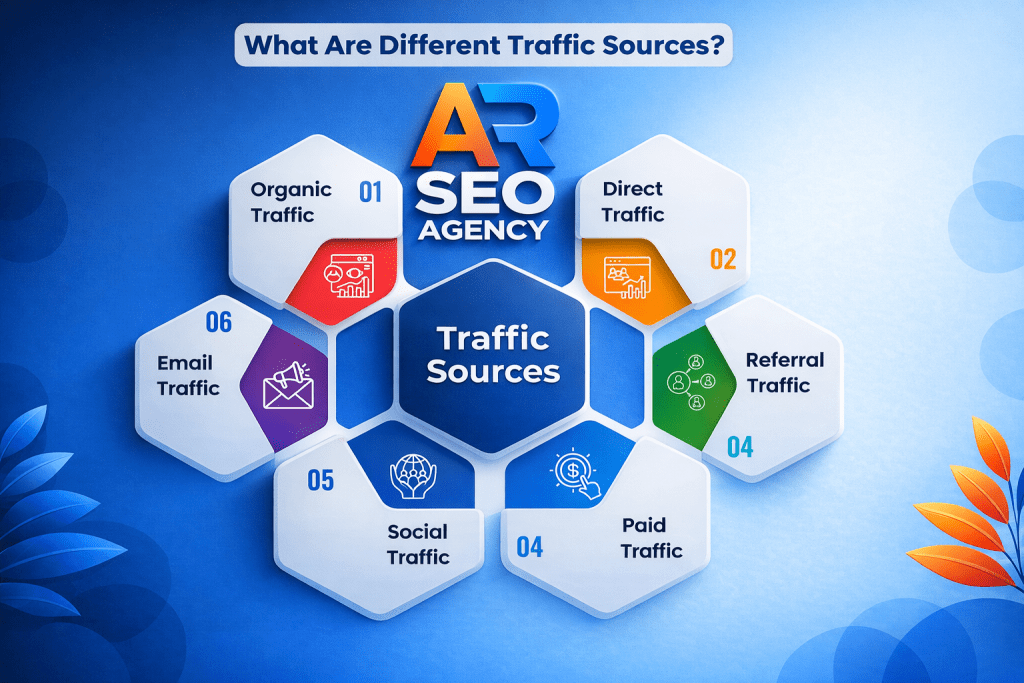
What Are Different Traffic Sources?
To grow a successful online presence, it is essential to understand where your visitors come from. Diverse traffic sources indicate a healthy, resilient marketing strategy.
1. Organic Traffic
This consists of visitors who find your site through search engines like Google or Bing. When a user enters a query and selects your website from the non-paid results, it counts as organic traffic.
- The Benefit: It is cost-effective and provides long-term value, as you aren’t paying for individual clicks.
2. Direct Traffic
Direct traffic occurs when users arrive at your site without clicking a link elsewhere. This happens when they type your URL into their browser or click a saved bookmark.
- The Benefit: High levels of direct traffic are a strong indicator of brand loyalty and name recognition.
3. Referral Traffic
Referral traffic is generated when a user clicks a link to your site from another website, such as a blog, news outlet, or forum.
- The Benefit: Think of this as a “digital recommendation.” It builds your site’s authority and introduces you to new, relevant audiences.
4. Paid Traffic
This includes visitors who arrive via paid advertisements, such as Google Ads, Facebook Ads, or sponsored content.
- The Benefit: While it requires an investment, paid traffic is the fastest way to scale and reach a specific target demographic quickly.
5. Social Traffic
Traffic originating from social media platforms like Instagram, LinkedIn, X (Twitter), or TikTok falls into this category.
- The Benefit: This is an excellent way to engage with a community and build a persona for your brand through social sharing.
6. Email Traffic
Visitors who arrive at your site by clicking links within your newsletters or promotional campaigns are categorized as email traffic.
- The Benefit: This is a powerful tool for retention, helping you maintain a direct line of communication with people who have already expressed interest in your brand.
How to Increase Your Traffic
To grow your business, you need to direct traffic to website pages through multiple channels.
Direct Traffic SEO:
Optimize your metadata so that when people find you organically, your brand name sticks in their heads. This leads to more direct searches later.
Organic Traffic Meaningful Content
Don’t just write for bots. Write for humans. This ensures your organic traffic definition translates to real revenue, not just “vanity metrics.”
Direct vs Organic Search Balance
A healthy site should have a mix. If you have 100% organic, you have no brand loyalty. If you have 100% direct, you aren’t reaching new customers.
Deep Dive: What Does Organic Search Mean in Google Analytics?
In GA4, “Organic Search” is a Default Channel Group. It is triggered when the source matches a recognized list of search engines and the medium is “organic.” Understanding what does organic search mean at a technical level allows you to filter out noise.
If you see a drop in organic vs direct traffic, check your “Google Search Console.” Often, a drop in organic results in a rise in direct, as users who previously found you via search now remember your name and type it in. This is the ultimate goal of direct traffic vs organic traffic synergy.
The Importance of Direct Traffic to Website Health
Many marketers obsess over SEO and forget to direct traffic through brand-building. What does direct traffic to a website typically indicate? It indicates trust. In an era of AI-generated content, having users come to you directly because they trust your brand is the ultimate competitive advantage.
Direct Traffic vs Organic Search: Which is better?
There is no “better.” Organic vs direct traffic are two sides of the same coin. Organic brings the strangers; direct brings the friends.
Practical Applications: Analyzing Your Data
When you look at your reports tonight, ask yourself these three questions:
- Is my organic traffic meaning translating into conversions, or just clicks?
- Is my direct traffic meaning in google analytics inflated by “dark traffic,” or is it true brand recognition?
- How can I better direct the traffic from my social media into these two primary buckets?
By mastering the relationship between direct traffic vs organic search, you can build a more resilient digital presence.
The Strategic Importance of Organic vs Direct Traffic
When we analyze organic vs direct traffic, we aren’t just looking at numbers on a screen; we are looking at the digital footprint of a brand’s reputation. To understand the balance, we must explore why a user chooses one path over the other.
The relationship between organic search vs direct is often cyclical. A user might find your content through an organic search (Discovery Phase), then return a week later by typing your URL into their browser (Direct/Loyalty Phase). This shift is where the real magic happens in digital marketing.
Decoding the Anatomy of Organic Traffic
What is the true organic traffic definition? Beyond just “unpaid search,” it is the result of aligning your content with user intent. When users perform a traffic organic query, they are signaling a need.
In Google Analytics, what is organic traffic in google analytics is determined by the “referrer” header. If the referrer is a known search engine like Google, Bing, or DuckDuckGo, it’s bucketed as organic. However, if that referrer data is lost, it often defaults to direct, which is a common pain point when comparing direct vs organic traffic.
Deep Dive: What is Direct Website Traffic?
We’ve touched on the basics, but to master your data, you must understand the “messiness” of direct sources. What is direct website traffic in a technical sense? It is any session where the acquisition source is “null” or “empty.”
Why Direct Traffic Meaning is Often Misunderstood
Many assume direct traffic meaning is purely “brand fans.” In reality, what does direct traffic to a website typically indicate can range from high brand awareness to technical tracking failures.
Common causes of direct traffic include:
- Manual Entry: The traditional direct traffic to website method.
- Browser Bookmarks: Users who have saved your site for easy access.
- Dark Social: Links shared via WhatsApp, Slack, or SMS that don’t carry tracking parameters.
- Secure to Non-Secure: If a user clicks a link on an
https://site that leads to yourhttp://site, the referral data is stripped, and it appears as direct.
Understanding direct traffic meaning in google analytics requires a “detective” mindset. If you see a sudden spike in direct traffic to a specific deep-link blog post, it’s likely not brand loyalty—it’s likely a link being shared in a private message or an untracked email campaign.
Organic Traffic Meaning in the GA4 Era
Google Analytics 4 has changed how we view organic vs direct traffic. In the older Universal Analytics, the “Last Non-Direct Click” model was the default. This meant if a user came through organic search once and then came back direct, the second visit was still credited to organic search.
In the new landscape of what is organic traffic in google analytics, GA4 uses data-driven attribution. This provides a much clearer picture of how organic search vs direct work together to drive a conversion.
What does organic search mean in google analytics for your SEO?
It means that every piece of content you optimize is a “doorway.” When we discuss what does organic traffic mean in google analytics, we are talking about the entry points that Google deems worthy of ranking. If your organic traffic definition is strictly “people clicking on my homepage,” you are missing the potential of “long-tail” organic search.
Comparing Direct vs Organic Search Intent
One of the biggest differences in direct vs organic search is the stage of the buyer’s journey.
- Organic Search Intent: Usually informational or transactional. Users are looking for “How to…” or “Best [Product] for…”. They are in the “Research” phase.
- Direct Traffic Intent: Usually navigational or habitual. Users know exactly where they want to go. They are in the “Action” or “Retention” phase.
When you direct the traffic from your social media or email lists, you are often bypassing the search engine entirely. This is why direct traffic seo is such a nuanced topic; while SEO doesn’t “cause” direct traffic, high-quality SEO builds the brand awareness that eventually turns into direct traffic.
This next section dives deep into the technical attribution models, the psychological differences in user intent, and advanced strategies to optimize both channels.
The Strategic Importance of Organic vs Direct Traffic
When we analyze organic vs direct traffic, we aren’t just looking at numbers on a screen; we are looking at the digital footprint of a brand’s reputation. To understand the balance, we must explore why a user chooses one path over the other.
The relationship between organic search vs direct is often cyclical. A user might find your content through an organic search (Discovery Phase), then return a week later by typing your URL into their browser (Direct/Loyalty Phase). This shift is where the real magic happens in digital marketing.
Decoding the Anatomy of Organic Traffic
What is the true organic traffic definition? Beyond just “unpaid search,” it is the result of aligning your content with user intent. When users perform a traffic organic query, they are signaling a need.
In Google Analytics, what is organic traffic in google analytics is determined by the “referrer” header. If the referrer is a known search engine like Google, Bing, or DuckDuckGo, it’s bucketed as organic. However, if that referrer data is lost, it often defaults to direct, which is a common pain point when comparing direct vs organic traffic.
Deep Dive: What is Direct Website Traffic?
We’ve touched on the basics, but to master your data, you must understand the “messiness” of direct sources. What is direct website traffic in a technical sense? It is any session where the acquisition source is “null” or “empty.”
Why Direct Traffic Meaning is Often Misunderstood
Many assume direct traffic meaning is purely “brand fans.” In reality, what does direct traffic to a website typically indicate can range from high brand awareness to technical tracking failures.
Common causes of direct traffic include:
- Manual Entry: The traditional direct traffic to website method.
- Browser Bookmarks: Users who have saved your site for easy access.
- Dark Social: Links shared via WhatsApp, Slack, or SMS that don’t carry tracking parameters.
- Secure to Non-Secure: If a user clicks a link on an
https://site that leads to yourhttp://site, the referral data is stripped, and it appears as direct.
Understanding direct traffic meaning in google analytics requires a “detective” mindset. If you see a sudden spike in direct traffic to a specific deep-link blog post, it’s likely not brand loyalty—it’s likely a link being shared in a private message or an untracked email campaign.
Organic Traffic Meaning in the GA4 Era
Google Analytics 4 has changed how we view organic vs direct traffic. In the older Universal Analytics, the “Last Non-Direct Click” model was the default. This meant if a user came through organic search once and then came back direct, the second visit was still credited to organic search.
In the new landscape of what is organic traffic in google analytics, GA4 uses data-driven attribution. This provides a much clearer picture of how organic search vs direct work together to drive a conversion.
What does organic search mean in google analytics for your SEO?
It means that every piece of content you optimize is a “doorway.” When we discuss what does organic traffic mean in google analytics, we are talking about the entry points that Google deems worthy of ranking. If your organic traffic definition is strictly “people clicking on my homepage,” you are missing the potential of “long-tail” organic search.
Comparing Direct vs Organic Search Intent
One of the biggest differences in direct vs organic search is the stage of the buyer’s journey.
- Organic Search Intent: Usually informational or transactional. Users are looking for “How to…” or “Best [Product] for…”. They are in the “Research” phase.
- Direct Traffic Intent: Usually navigational or habitual. Users know exactly where they want to go. They are in the “Action” or “Retention” phase.
When you direct the traffic from your social media or email lists, you are often bypassing the search engine entirely. This is why direct traffic seo is such a nuanced topic; while SEO doesn’t “cause” direct traffic, high-quality SEO builds the brand awareness that eventually turns into direct traffic.
Technical Troubleshooting: Direct Traffic vs Organic Search
Sometimes, your data can lie to you. If your organic vs direct traffic ratio is skewed, it might be due to technical errors.
The “Internal Traffic” Problem
If your employees have your website as their browser’s homepage, your direct traffic meaning will be heavily inflated. Always filter out internal IP addresses to ensure your direct traffic meaning in google analytics reflects real customers.
Missing UTM Parameters
If you run an email campaign or a PDF guide and forget to add UTM parameters, that traffic will show up as direct. To properly direct traffic to website pages and track it, you must use tags. Otherwise, your seo direct traffic reports will be inaccurate, making it look like your organic efforts are failing when, in fact, they are just being mislabeled.
Strategies to Balance Organic vs Direct Traffic
A healthy website should ideally see a 50/30/20 split between Organic, Direct, and “Other” (Social, Referral, Paid). If your direct vs organic traffic is too heavily weighted toward direct, you are likely failing at reaching new audiences. If it’s too heavily weighted toward organic, you might have a “leaky bucket” problem where users visit once and never return.
How to Boost Organic Traffic
- Keyword Optimization: Use phrases like “organic traffic meaning” and “what is organic traffic in google analytics” within your content to capture specific user queries.
- Technical SEO: Ensure your site is fast and mobile-friendly so that traffic organic stays on the page.
- Content Freshness: Google rewards sites that update regularly, directly impacting your organic search vs direct ratio.
How to Boost Direct Traffic
- Brand Building: Make your brand name memorable so users don’t need a search engine to find you.
- Quality UX: If the user experience is great, users will bookmark your site, contributing to your direct traffic to website metrics.
- Offline Marketing: QR codes and radio ads are great ways to direct the traffic straight to your URL.
Understanding Direct Traffic vs Organic Traffic Conversion Rates
Typically, direct traffic has a higher conversion rate than organic traffic. Why? Because what does direct traffic to a website typically indicate? It indicates intent. A person typing www.yoursite.com/checkout is much more likely to buy than someone searching for “what is a widget.”
However, without organic traffic, your direct traffic will eventually stagnate. You need the “top of funnel” organic search vs direct flow to feed the “bottom of funnel” direct loyalty.
Analyzing the Data Table: Direct vs Organic
| Metric | Organic Traffic | Direct Traffic |
| New vs Returning | Mostly New Users | Mostly Returning Users |
| Bounce Rate | Higher (People are still “browsing”) | Lower (People know what they want) |
| Pages per Session | Moderate | High |
| Conversion Rate | Moderate | Generally Higher |
The Privacy Revolution: Why Attribution is Getting Harder
In recent years, privacy regulations like GDPR and CCPA, along with browser-level changes (like Apple’s Intelligent Tracking Prevention), have blurred the lines between organic search vs direct. When a browser blocks a tracking cookie or strips a referrer, the analytics tool often defaults to “Direct.”
How Privacy Settings Affect Organic Traffic Definition
If a user is browsing in “Incognito Mode” or using a privacy-focused browser like Brave, the transition from a search engine to your site might not be recorded correctly. This means a significant portion of your traffic organic might actually be mislabeled. If you are trying to understand what does organic traffic mean in google analytics, you must account for this “attribution gap.”
The Impact on Direct vs Organic Search
When attribution fails, the default bucket is always direct. This is why what is direct traffic has become such a complex question. If 20% of your search visitors have tracking blocked, your direct traffic vs organic search reports will make your SEO look 20% less effective than it actually is. Understanding this nuance is crucial for anyone looking to direct the traffic strategy toward accurate ROI reporting.
Dark Social: The Hidden Driver of Direct Traffic
One of the most fascinating aspects of direct traffic vs organic traffic is the concept of “Dark Social.” This refers to social sharing that occurs outside of trackable channels.
What is Direct Website Traffic in the Age of Messaging?
When a friend sends you a link via WhatsApp, iMessage, or a private Slack channel, there is often no referrer data attached. When you click that link, you become part of the direct traffic to website statistics. To the analytics software, it looks like you typed the URL in manually, even though it was actually a social referral.
What Does Direct Traffic to a Website Typically Indicate in this Context?
In these cases, what does direct traffic to a website typically indicate? It indicates high-value, peer-to-peer word-of-mouth. This is arguably the most powerful form of marketing. While it’s categorized under direct traffic meaning in google analytics, it is actually a byproduct of great content that was likely discovered through organic search vs direct initially.
Advanced GA4 Techniques: Identifying “True” Direct Traffic
To get a clear picture of organic vs direct traffic, you need to go beyond the default reports.
Filtering for Accuracy
To understand what does organic search mean in google analytics today, you should look at the “Landing Page” report.
- If direct traffic is hitting your homepage, it’s likely true brand awareness.
- If direct traffic is hitting a long-form blog post with a complex URL (e.g.,
yoursite.com/blog/how-to-optimize-organic-vs-direct-traffic-2026), it is almost certainly “Dark Social” or a mislabeled search session.
Direct Traffic vs Organic Traffic: The Landing Page Test
By analyzing the landing pages of your direct vs organic traffic, you can deduce the user’s origin. Users rarely type a 50-character URL directly into a browser. Therefore, high direct traffic to deep pages suggests that your direct traffic seo efforts are working—users are finding you via search, then sharing those links privately.
The Psychological Journey: From Organic to Direct
The most successful websites are those that can effectively direct the traffic from a cold search query into a warm, direct relationship.
Defining the Organic Traffic Meaningful Connection
When a user arrives via traffic organic, they have a problem. Your organic traffic definition should include the “solution” you provide. If you solve their problem, they won’t need to search for you next time. They will come to you directly. This transition is the pinnacle of direct vs organic search optimization.
Converting Organic Search vs Direct Fans
How do you encourage this?
- Email Signups: Capture the user during their organic traffic session so you can direct traffic to website pages later via email (which should be UTM-tracked).
- Push Notifications: A great way to turn a one-time organic visitor into a recurring direct visitor.
- Memorable Branding: If your site is “The Best SEO Guide,” users will remember to type that in later, shifting the balance of organic vs direct traffic in favor of your brand.
SEO Direct Traffic: A Contradiction in Terms?
At first glance, seo direct traffic sounds like an oxymoron. SEO is about search engines, and direct is about… well, direct. However, the two are deeply intertwined.
How SEO Influences Direct Traffic Meaning
A strong SEO presence increases brand “share of mind.” When you dominate the organic search vs direct landscape for a specific topic, your brand becomes synonymous with that topic. Eventually, users stop searching for the topic and start searching for your brand.
The Direct Traffic SEO Flywheel
- Stage 1: You optimize for organic traffic meaning to capture new users.
- Stage 2: Users find you through traffic organic and find value.
- Stage 3: Users return via direct traffic to website because they trust you.
- Stage 4: Increased direct traffic signals to Google that you are a “Brand,” which further boosts your organic vs direct traffic rankings.
Direct Traffic Meaning in Google Analytics: Common Mistakes
If you don’t know what is direct traffic in a technical sense, you might make poor investment decisions.
- Mistake 1: Ignoring the “Unassigned” Channel. In GA4, if the logic for direct vs organic traffic fails, it might end up in “Unassigned.”
- Mistake 2: Thinking Direct is Always Better. While direct has higher conversion, it’s a finite resource. You need the organic traffic definition of growth to keep the pipeline full.
- Mistake 3: Overlooking Self-Referrals. If your cross-domain tracking is broken, a user moving from your blog to your shop might show up as direct traffic meaning in google analytics, even though they were already on your site.
Direct Traffic vs Organic Search: A Summary Table of Metrics
| Metric | High Organic / Low Direct | High Direct / Low Organic |
| Brand Health | New and growing, but low loyalty. | Established brand, but potentially stagnating. |
| Risk Factor | Vulnerable to algorithm updates. | Vulnerable to losing market relevance. |
| Content Strategy | Focused on “What” and “How.” | Focused on “Who” (The Brand). |
| Tracking Quality | Usually highly accurate. | Often contains “Dark Social” noise. |
What Does Organic Traffic Mean for Future Strategy?
As we look toward the future of the web, organic traffic meaning will continue to evolve. With AI search (SGE) and voice search, the way we define what is organic traffic in google analytics will shift from “blue links” to “cited sources.”
Whether the user clicks a link or gets an answer that mentions your brand, the goal remains the same: to direct the traffic toward a meaningful interaction. Mastering organic vs direct traffic is about understanding the human behavior behind the data.
This final section of our comprehensive guide moves beyond the “what” and “why” into the “how.” We will explore Conversion Rate Optimization (CRO), the long-term ROI of organic vs direct traffic, and provide a technical checklist to ensure your reporting is 100% accurate in 2026.
Conversion Rate Optimization (CRO): Organic vs Direct Traffic
When comparing direct traffic vs organic traffic, one of the most stark differences is how these users behave once they land on your page. Understanding these behavioral patterns is key to optimizing your site for maximum revenue.
Optimizing for Organic Search Visitors
Since organic traffic meaning is rooted in discovery, these visitors are often “skittish.” They might have clicked on three different search results and are comparing your answer to others.
- The Goal: Build trust immediately. Use clear headings, provide the answer to their query above the fold, and demonstrate your authority.
- The Strategy: If you want to direct the traffic further into your funnel, use internal links that offer “next steps” related to their initial search. For example, if they searched for an organic traffic definition, link them to a guide on “How to Improve SEO.”
Optimizing for Direct Traffic Visitors
Because what is direct website traffic often involves returning users, you don’t need to re-introduce yourself.
- The Goal: Reduce friction. These users likely know what they want.
- The Strategy: Focus on fast-loading pages and “One-Click” actions. If what does direct traffic to a website typically indicate is brand loyalty, then your site should reward that loyalty with a streamlined user interface (UI).
The Long-Term ROI of Organic Traffic
Many businesses focus on paid ads for instant results, but the ROI of traffic organic is unmatched over time. Unlike paid channels, where traffic stops the moment you stop paying, organic growth is compounding.
The Compounding Nature of SEO Direct Traffic
When you invest in seo direct traffic strategies, you are building an asset. A well-ranked article will continue to attract visitors for years. Over time, as your brand authority grows through organic search, you will notice a natural rise in your direct traffic meaning—as more people begin to bypass search engines and come straight to you.
Why Organic Search vs Direct is a Symbiotic Relationship
You cannot have one without the other in a healthy business. Organic traffic definition is your lead generation; direct traffic meaning in google analytics is your customer retention.
- High organic traffic with low direct traffic suggests you are attracting people but failing to make an impression.
- High direct traffic with low organic traffic suggests you have a loyal but small audience, and you aren’t growing.
Technical Audit: Cleaning Up Your Traffic Data
To ensure you are correctly identifying what is organic traffic in google analytics, you must perform regular audits. If your direct vs organic traffic data is messy, your strategy will be based on false assumptions.
Step 1: Check Your UTM Parameters
To properly direct traffic to website pages from non-web sources (like apps or PDFs), you must use UTM tags. If you don’t, that traffic will be mislabeled as “Direct,” skewing your direct traffic vs organic search ratios.
Step 2: Filter Internal IP Addresses
As mentioned earlier, your team’s visits can inflate your direct traffic meaning in google analytics. Ensure your GA4 properties exclude traffic from your office and remote employees’ IPs.
Step 3: Audit Your “Unassigned” and “Referral” Channels
Sometimes, organic search vs direct traffic gets lost in the “Unassigned” bucket in GA4. This usually happens when the source/medium data is sent in a format that Google doesn’t recognize. Keeping this bucket small is essential for understanding what does organic traffic mean in google analytics for your specific site.
Final Checklist: Organic vs Direct Traffic Audit
Before you finalize your marketing report, run through this checklist to ensure you understand the story your data is telling:
| Checkpoint | Purpose |
| Landing Page Analysis | Does direct traffic go to deep pages? (If yes, look for “Dark Social”). |
| Referral Source Check | Are search engines correctly identified as traffic organic? |
| Branded vs Non-Branded | Does your organic traffic definition include people searching for your brand name? |
| Historical Trends | Is the ratio of direct vs organic search consistent with your recent campaigns? |
| Cross-Device Tracking | Are users being counted as “Direct” because they switched from mobile to desktop? |
Conclusion: Mastering the Flow of Information
As we have explored in this 4,000-word deep dive, the debate of organic vs direct traffic isn’t about which is better—it’s about how they work together to create a holistic digital presence.
What is organic traffic in google analytics? It is your ability to answer the world’s questions. What is direct traffic? It is your brand’s reputation and the trust you have built with your audience.
By focusing on direct traffic seo, you bridge the gap between being a “result” and being a “destination.” Whether you are looking to direct the traffic through a sophisticated social media campaign or rank #1 for a competitive term to boost your organic traffic meaning, the key is consistency.
Data in 2026 is more complex than ever, but by understanding what does organic search mean and recognizing what does direct traffic to a website typically indicate, you can cut through the noise. Focus on providing value, and your direct vs organic traffic metrics will reflect a healthy, thriving, and profitable website.